Section 3 · Church Life
Church Events and Activities
Which church events are worth a small congregation's energy: youth retreats, service days, mission trips and the planning that makes them safe.
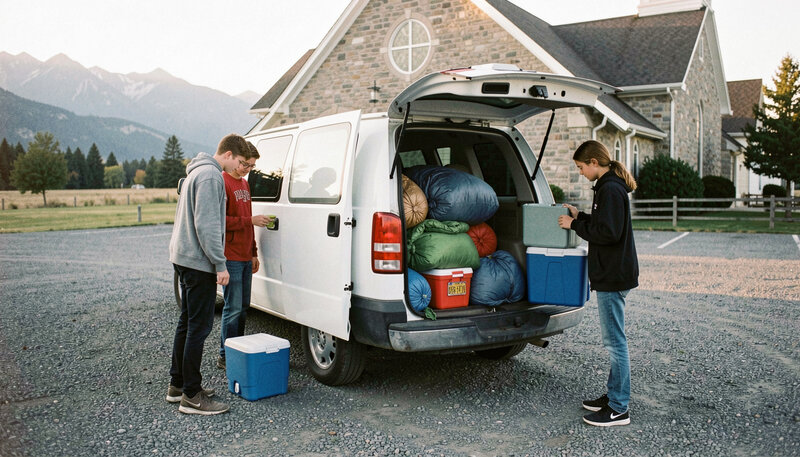
Church events are where a congregation's life becomes visible to itself: the potluck that fills the fellowship hall, the retreat that a youth group talks about for a year, the workday when the parsonage gets painted. Events are also where small churches most often overreach, planning a calendar their volunteers cannot carry and burning out the faithful in the process. This guide covers the event types that earn their place, and the planning and safety craft that keeps them from costing more than they give.
Choose event types that fit the team you have
Every event type has a different load profile, and matching the type to the team is the first planning decision. Shared meals carry the lowest load and the highest connection per hour of effort, because the work is cooking that people already know how to do. Service days, yard work for a widow, food bank shifts, add logistics but recruit well, since working side by side suits people whom a dinner alone would not draw. Retreats and trips carry the highest load, transport, overnight supervision, screening requirements and budgets, and should be rare enough to stay special. A healthy year in a small church holds several meals, a couple of service days and at most one or two overnight events.
The planning sequence that prevents disasters
Events fail in a predictable order, so plan in the reverse order. Set the date against the church and school calendars first, because a youth retreat on prom weekend is dead on arrival. Confirm the team before publicizing the event, with names next to roles rather than a general appeal for help. Walk the venue at the hour the event will run, checking lights, heat, restrooms, parking and the questions neighbors will ask about noise and cars. Build the budget with a contingency line and decide in advance who can spend without a meeting. Only then announce it, with one clear channel for sign-ups. Announcing earlier feels productive and simply moves the panic forward in time.
What makes a church dinner work
The church meal is the small congregation's best event and deserves actual design. Assign dishes by category rather than leaving it open, so the table does not end as twelve desserts and one casserole. Seat people at mixed tables rather than family clusters, which is the whole point of the event, and give the meal a light structure: a short welcome, a moment that names the reason for gathering, and an ending time that respects the people who cook. Keep a written record of what worked, attendance, quantities, the dish that vanished first, because next year's committee starts from this year's notes or from zero, and zero is how the same mistakes get relearned every fall.
Retreats and trips away from the building
Overnight events justify their cost only with the safety machinery in place before the deposit is paid. The floor is the same as for any ministry serving minors, background checks, the two-adult rule and written parent permission with medical information, and it extends to transport: drivers approved in advance, seatbelt counts, and a plan for the moment a student is somewhere other than where the plan says. Carry paper copies of permissions, because retreat centers have famously absent wifi. Build the schedule with more margin than seems necessary, one adult whose only role is dealing with the unplanned, and a communication tree that tells parents about delays before parents call you. The volunteer roles this machinery requires are cataloged in the volunteer guide.
Service days and the community outside the walls
A service day points the congregation outward, which small churches need scheduled or it never happens. The craft is choosing tasks that match unskilled willingness, raking, painting, packing, stocking, with one skilled leader per team rather than tasks that require skills nobody has. Partner with an existing local organization for the recipient list, because the church that picks its own recipients accidentally picks its own members' relatives. Take photographs with permission and report back to the whole church the following Sunday, since a service day that the congregation hears about recruits the next one. The connection between these outward events and the weekly rhythm of a congregation is drawn in the activities overview.
How do you staff an event without exhausting the church
The staffing math of events is unforgiving: every event on the calendar draws from the same pool of people who already serve weekly in nursery, sound and youth group. Before adding an event, count the new roles it creates and check them against actual names, and if the names do not exist, the event does not exist yet. Rotate event leadership rather than defaulting to whoever did it last time, and deliberately schedule seasons with nothing on them, a February with no events is not a failure but a recovery period. The load-tracking habits that make this counting possible are described in the volunteer guide's retention section.
After the event: the follow-up that doubles the value
An event's value is realized in the two weeks after it, or it evaporates. Three habits capture it. Thank people specifically and quickly, naming what their particular work made possible. Debrief the team for twenty minutes while memory is fresh, and write the answers down with the event box or folder. Connect the event to what comes next, inviting the guest who clicked with the youth group toward a normal Wednesday gathering, or the new family toward a small group, because the event opens a door that the weekly rhythm must then walk through. Churches that skip this step pay full price for events and collect half the benefit.
A calendar worth defending
The final discipline is annual: lay the whole year out, mark the load peaks, and cut something. A calendar with fewer, better events serves a congregation more than a full one that exhausts it, and saying no to a good idea in March is what makes the great idea in October possible. Plan the year around the natural rhythms already documented in this section, defend the empty weeks like the asset they are, and the events that remain will have the team, the energy and the follow-up to be worth remembering.