Section 1 · Student Ministry
How to Build a Youth Ministry
A step-by-step path for starting a youth ministry in a small church: vision, leaders, a weekly gathering, parent trust and a sustainable calendar.
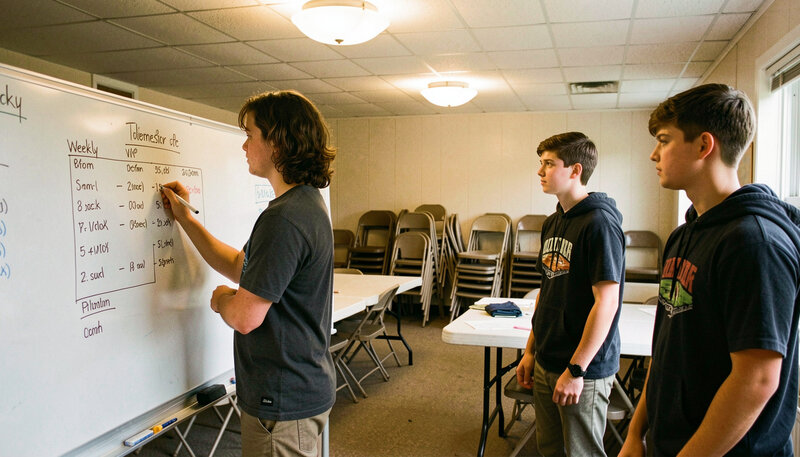
Most youth ministries in small churches are not built by specialists. They are built by a volunteer who agreed to try, a pastor who carved out one evening, and a group of parents who decided their teenagers needed somewhere to be known. This guide lays out the ordered steps for starting a student ministry with few people, little budget and no paid staff, in the order that works: vision first, then leaders, then a weekly gathering, then parent trust, then a calendar designed to last. Skip an early step and the later ones get expensive.
Write a vision you can say out loud
Before chairs are arranged or games are bought, write one sentence that says what this ministry is for. A workable shape is: a sentence naming who is welcomed, what happens weekly and what a student walks away with. Test the sentence on three people: a parent, a church member with no children at home and a teenager. If the teenager smirks, the sentence is probably written for the church bulletin rather than for the students. The vision is not a slogan; it is the measuring stick for every later decision, from which game to buy to which retreat to skip.
Recruit two adults before you need them
A ministry built on one leader is one flu season from closing. The working minimum is a team of two or three adults with defined roles: one who leads the evening, one who builds relationships on the sidelines, one who handles communication with parents. Recruit for warmth and reliability before charisma; teenagers forgive almost anything except an adult who does not come back. Because these adults will serve minors, the church's screening floor applies to them the same as to anyone else: a background check, a two-adult rule and open doors. The volunteer guide covers recruiting conversations, screening steps and the habits that keep a team healthy for years instead of months.
How do you launch with five students
Launch small and informal, and resist the temptation to wait for a crowd. A first gathering works with five students, a table of food and a plan you can hold in your head. Spend the first month learning names, inside jokes and who sits near the door. The temptation in month one is to program heavily to prove the ministry is serious; the opposite is true. A light, warm, predictable evening builds the trust that heavier teaching will later stand on. The full anatomy of that evening, from welcome to game to short teaching to small group conversation, is laid out in the gatherings guide, and it doubles as the launch plan.
Build parent trust early and on purpose
Parents decide whether a student comes back, and in a small church every parent knows the leader's family history. Trust is built through boring, repeatable communication: a short note before each term saying what will be taught, a text when a student is missed, a clear pickup time that is honored, and a named person who answers questions. Invite parents to see the space and meet the team before the first night. Say plainly how the two-adult rule works. A parent who has stood in the room and met the adults sends their teenager back; a parent who only receives a calendar flyer keeps one eye on the door all evening.
What does a sustainable calendar look like
The first calendar mistake of small church youth ministry is copying the program of a church with staff. The sustainable version is one weekly gathering, one monthly added element and two or three anchors a year: a retreat, a service day, a summer camp or a mission trip. Protect the weekly gathering above all, because it is where relationships compound. Plan leader rest into the calendar by naming the weeks the ministry does not meet, such as school holiday weeks, rather than discovering exhaustion in February. The event side of the year, with planning and safety basics for retreats and trips, is covered in church events and activities.
Teach short, talk long
Teenagers listen in short bursts and talk in long ones. Shape the teaching part of the ministry accordingly: ten minutes of clear teaching built around one idea, then conversation in small circles where leaders ask more than they answer. Over time, hand parts of the evening to students themselves, which both lightens the load and grows the next generation of leaders; the student leaders guide gives the progression. For the conversation side, the Bible study guides offer passage choices and question types that open real discussion rather than quiz answers.
Know what success looks like in year one
Success in the first year is not a full room. It is a ministry that still exists, a team that still likes each other, parents who trust the communication and a handful of students who call it their group. Attendance will dip after the novelty fades, and the leaders who keep the evening warm through that dip are the ones who see the group settle. Count known names, returned permission slips and conversations that went past the parking lot, not headcounts against another church.
Steps to take this week
Write the one-sentence vision and say it to three people. Ask two adults to share the load, one conversation at a time, and start the screening conversation with the church the same week. Pick an evening, a room and a simple food plan, and set the first six dates. Tell the parents of every student in the church what is starting, when and why. Then open the section index and read the gatherings guide before the first night, because the first evening sets the tone the students will expect every week after.